Private Driver in Santa Ana
Santa Ana service often means practical, time-sensitive trips, from the Civic Center and the courts to county offices and downtown. We send a private driver to operate your own vehicle across Santa Ana and the rest of Orange County.
Service Area · Serving Santa Ana and all of Orange CountyHover to pause and read
Touch to pause and read
Santa Ana Days Are Built Around Doors and Deadlines
Santa Ana combines courts, government offices, museums, family attractions, historic neighborhoods, medical buildings, downtown programs, and John Wayne Airport. Each destination imposes a different clock. A courthouse needs screening time, a county office may use an appointment window, a performance begins at a stated hour, and an airline sets its own arrival guidance.
Your Car Our Driver assigns a private driver to the client's automobile. The client identifies the commitments that cannot move, and the office connects those obligations through one schedule. The familiar car remains available between addresses while the assigned employee handles lawful positioning, parking, and the next confirmed meeting point.
The Civic Center Must Become a Specific Building
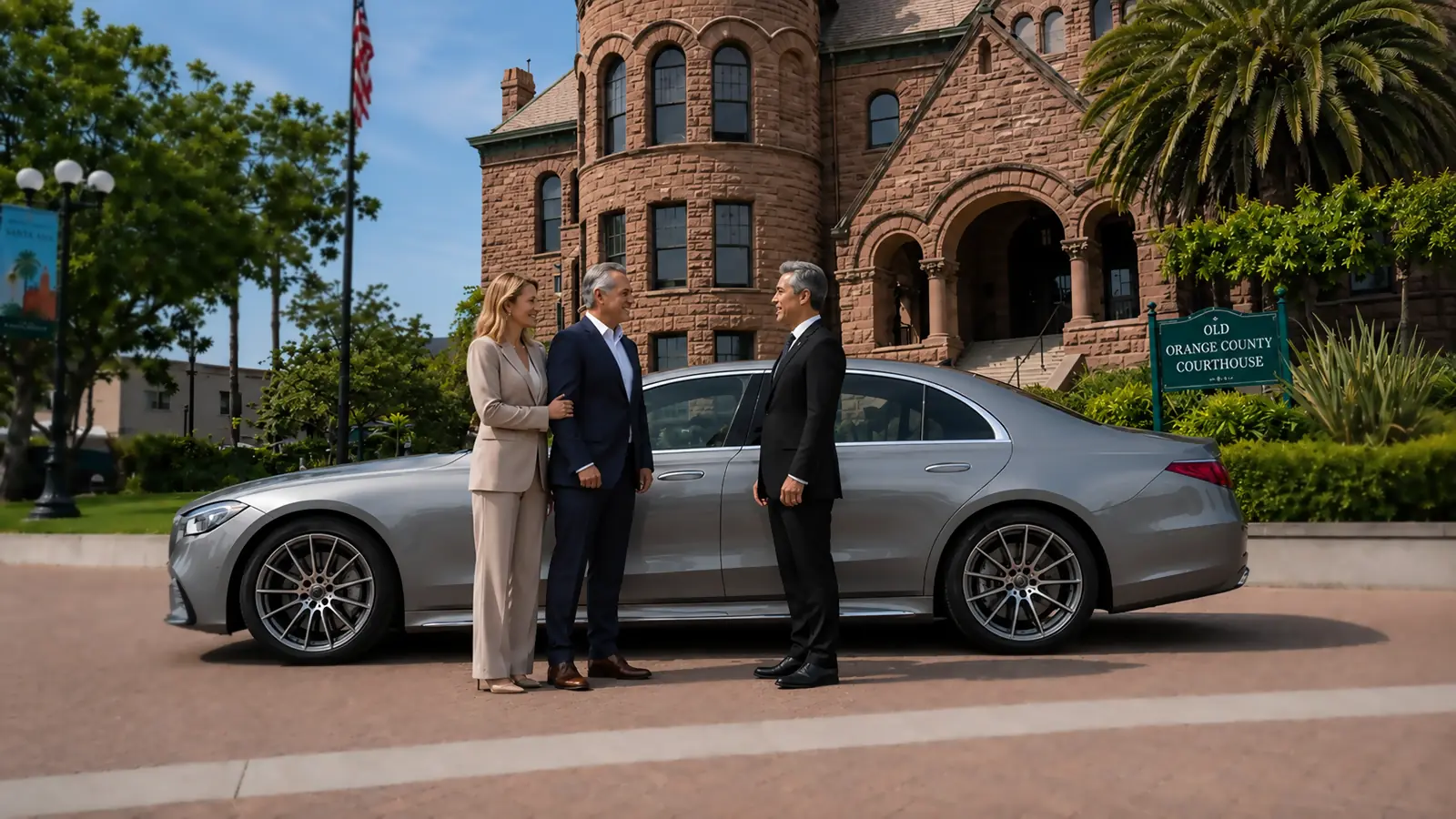
Civic Center is a district, not a complete destination. The Central Justice Center, Civil Complex Center, Community Court, Old Orange County Courthouse, and individual public offices use different entrances and approaches. A case notice or agency name should be translated into the exact facility before departure time is calculated.
The booking should state the building, required inside time, passenger name, and any meeting scheduled before the proceeding. Security, elevators, document review, and walking from the curb all belong ahead of the official appointment, not after it.
Court Mornings Are Calculated Backward
A 9:00 a.m. hearing does not mean reaching the curb at 9:00. The passenger may need to clear screening, locate the assigned room, speak with counsel, or organize papers before the calendar begins. The useful target is the moment the client must be ready inside.
From that target, the office works backward through the building approach, expected security allowance, cross-city route, and residential departure. A home in Floral Park, Park Santiago, Delhi, or South Coast Metro creates a different first segment. The neighborhood and court door jointly shape the morning.
When a matter runs beyond its expected ending, the client can send an update after release. The automobile remains part of the reserved period without requiring an inaccurate completion promise at the beginning of the day.
Garage Selection Should Anticipate the Next Address
Parking near the Civic Center is not an isolated task. A garage that serves the first building may leave the automobile poorly placed for a later county office, downtown lunch, medical appointment, or return toward a residence. The continuing direction matters before the first space is selected.
The assigned employee can release the passenger at a lawful location, move the car to permitted parking, and remain reachable. After the appointment, both parties should use a named entrance, corner, or garage level. A large public complex has too many sides for an assumed reunion.
County Work Often Continues at Another Counter
Public business may involve records, signatures, filings, consultations, meetings, or a second office requesting additional material. Agency shorthand is not enough when departments occupy separate buildings. Each added stop should include its street address, entrance, appointment rule, and expected sequence.
Documents remain under the client's control. The office only needs the practical details required to connect the automobile with the correct building. If the next counter changes during the appointment, a direct message can establish the revised address without disclosing the substance of the matter.
"We have built our reputation one client at a time. If any part of your experience falls short of what you expected, I will make it right. You have my word, and every client has my mobile number."
Santa Ana Boulevard Has Several Street Roles
Near the Civic Center, Santa Ana Boulevard serves legal and public buildings. Farther east, it reaches the Santa Ana Regional Transportation Center and streets beyond downtown. Construction, public programs, transit activity, and temporary restrictions can change how a familiar block functions.
The itinerary should distinguish a boulevard address from a boulevard used only as a route. A passenger leaving an office, meeting someone at the transportation center, or attending a downtown event needs a different curb instruction. Current signs and official direction govern the final approach.
The Regional Transportation Center Needs an Arrival Plan
A rail passenger follows a timetable that can affect every later Santa Ana commitment. The reservation should include the service information, expected arrival, passenger contact, luggage, and authorized disposition of the client's automobile. The center itself does not identify the meeting side.
An arriving passenger may take time to leave the platform area or emerge at another exit. Direct cell contact can establish the active curb after the person reaches the public meeting area. If the arrival changes, the office can reconsider the later order instead of pretending the original minute still applies.
Fourth Street Is Best Identified by Block
Fourth Street and Calle Cuatro contain restaurants, shops, services, and community activity within a walkable downtown area. A storefront name becomes more useful when paired with the nearest cross street and preferred side of the block.
A client may enter one business and finish several doors away after lunch, shopping, or a meeting. The collection point should follow the client's actual position. During a festival or closure, a lawful corner outside the restricted area can replace the normal curb through direct communication.
Artists Village Follows the Program Schedule
Gallery openings, films, receptions, dining, and performances create an evening clock distinct from the nearby government calendar. The Santora Arts Building, The Frida Cinema, and the Yost Theater have separate entrances and release patterns.
The reservation should name the program, venue, starting time, and likely post-event location. If the party continues to a restaurant, that address becomes the new automobile meeting point. The assigned employee can remain outside the pedestrian flow rather than circling a venue the client has already left.
Downtown School Events Need an Authorized Handoff
A student program can add family traffic, performance equipment, instruments, garment bags, and school materials to blocks that serve offices at other hours. The school name should be joined to the campus entrance, program time, authorized passenger, and expected release area.
Parents determine the approved addresses and contacts. The client's automobile can retain the child's selected equipment and belongings throughout the schedule. At dismissal, a specific adult, corner, and phone contact create a clear handoff without interfering with school circulation.
North Main Street Connects Distinct Family Destinations
North Main Street links museums, family attractions, residential streets, and the approach toward MainPlace. Bowers Museum, Discovery Cube Orange County, and nearby properties may sit within the same corridor while requiring very different amounts of time and passenger preparation.
The purpose of the visit belongs in the reservation. A lecture, member program, science-center visit, family meal, and shopping stop do not use identical entrances or ending expectations. The next fixed obligation should be known before the automobile is placed for the current one.

Bowers Museum Programs May Use Another Entrance
A museum visit can include an exhibition, courtyard reception, auditorium presentation, luncheon, or private event. An invitation may direct guests somewhere other than the public doorway. Those instructions should accompany the street address.
Coats, gifts, mobility items, and personal belongings can remain inside the client's car. When the program concludes, the client can confirm the exit currently in use. The assigned employee may position for a later downtown meal, home gathering, or county appointment while the client remains focused on the museum.
Discovery Cube and the Santa Ana Zoo Create Different Rhythms
Discovery Cube Orange County is organized around an indoor science-center visit. The Santa Ana Zoo at Prentice Park involves outdoor movement and the pace of younger passengers. Treating both as generic family stops can lead to an unrealistic ending window.
The family should identify who is traveling, what remains aboard, the expected departure range, and the next firm commitment. Snacks, spare clothing, a stroller, and other supplies can stay where the household placed them. The parent supplies and correctly installs any child seat.
Historic Neighborhoods Require a Residence Address
Floral Park, French Park, West Floral Park, Park Santiago, Washington Square, and Wilshire Square occupy different positions around the city's larger streets. The neighborhood name provides context, but the exact home and household instruction complete the assignment.
A pickup may involve a driveway, side gate, preferred curb, or request to avoid blocking another residence. Morning conditions such as school activity, refuse collection, landscaping work, or a temporary obstruction can affect the first turn. On return, the client may choose a different side or garage approach.
Main Street and Bristol Street Serve Different Sequences
Main Street connects the Civic Center edge, North Main institutions, central properties, and the airport side of the city. Bristol Street reaches western neighborhoods, shopping, offices, and medical locations. The next destination determines which north-south corridor supports the itinerary.
Crossings at First Street, Seventeenth Street, Edinger Avenue, and MacArthur Boulevard can change the available options. The assigned employee follows current access and posted restrictions. A planned street is not useful after conditions have closed it.
Heritage Museum Visits Begin With the Event Grounds
The Heritage Museum of Orange County differs from a downtown tower or storefront. A school program, photography session, ceremony, historical visit, or private gathering may use a particular part of the grounds and a host-issued entrance.
Weather, setup activity, vendors, and guest circulation can alter the automobile approach. The booking should include the event instruction, relevant property area, expected ending, and next address. After passenger release, the car can be moved away from active setup and pedestrian paths.
Centennial Regional Park Needs a Reunion Edge
Centennial Regional Park may host a family outing, outdoor gathering, activity, or community program. A field, path, picnic area, or event boundary can leave the group far from the original automobile position.
Before the passenger exits, both parties can identify a visible landmark and a backup curb. A later message can replace that location if the group moves. The assigned employee remains on permitted automobile surfaces and follows park rules.

South Coast Metro Is Defined by the Property
South Coast Metro spans parts of Santa Ana and Costa Mesa. A hotel, office tower, restaurant, or meeting site should be identified by its full property address rather than assigned to a city from memory. The exact property determines the entrance, parking procedure, and street used afterward.
A Santa Ana schedule may connect an office near MacArthur Boulevard with John Wayne Airport, a residence, or an event on the Costa Mesa side. South Coast Plaza or Segerstrom Center may appear later in the day, but the original Santa Ana address and final return remain distinct parts of the itinerary.
John Wayne Airport Timing Starts at the Origin
John Wayne Airport is located in Santa Ana, yet a nearby terminal does not create one departure allowance for the entire city. A north Santa Ana residence, Civic Center office, west-side neighborhood, and South Coast Metro property approach the airport through different streets.
Provide the airline, terminal information, luggage count, requested curb-arrival time, and any passenger assistance arranged with the carrier. After passenger release, the client's automobile follows the authorized plan supplied before departure. It may return to a household, continue with a family member, or finish at another approved location.
Medical Appointments Need the Suite and Patient Door
A medical day may involve a diagnostic office, dental practice, therapy appointment, small office building, pharmacy, laboratory, or a larger Orange County campus. The provider name should be paired with the address, suite, patient entrance, and any family contact responsible for assistance.
The assigned employee can place the passenger at a lawful location and take the automobile to permitted parking. A test or consultation may finish earlier or later than expected. The client can report the current timing after speaking with facility personnel.
Clinical staff and family members remain responsible for care, discharge procedures, and personal assistance. The automobile assignment connects authorized addresses and keeps the client's belongings available.
Three Keys of Trust
Visibility
Share a live tracking link with anyone you choose so they can follow your vehicle's location in real time.
Communication
Reach your driver by cell.
Assurance
Reach our Chairman and CEO by cell.
One Automobile Can Organize a Mixed Santa Ana Day
Legal files, business materials, coats, luggage, mobility items, child seats, and personal supplies can remain together between appointments. The client decides what enters each building and what stays inside the car.
A residence may lead to a courthouse, museum lunch, medical office, downtown program, and final home return. Although the exterior instructions change at every stop, the interior remains familiar. Manual transmissions, specialty models, large passenger automobiles, and unusual controls should be discussed before confirmation.
Direct Contact Replaces an Obsolete Meeting Point
Plans can change inside a building. A hearing may release through another door, a gallery event may continue to dinner, a rail arrival may be late, or a family activity may finish on the far side of a park. The original pickup point can become useless even when the main itinerary remains intact.
The client receives the private driver's cell number and can also reach the Chairman and CEO by cell. A short message can establish a new corner, entrance, garage level, or property. Every assigned employee signs a confidentiality agreement covering addresses, legal schedules, family information, passenger conversations, and business calls.
W-2 Employment Supports Company Accountability
Before handling a Santa Ana booking, each private driver is vetted and placed on the company payroll as a W-2 employee. Each person is personally interviewed and background checked. Every private driver we hire has a minimum of two years of professional experience driving clients, so you are never anyone's first client. The company maintains continuous California DMV record monitoring and ongoing drug and alcohol screening.
The office knows which employee has been assigned and remains accountable for the reservation. More than nine out of ten company assignments come from returning clients. The business has served Los Angeles, Orange, and Riverside Counties since 2007.
Pricing Reflects the Reserved Santa Ana Period
Service in a client-owned sedan or SUV begins at $60 per hour. A larger client-owned automobile begins at $66 per hour. Every reservation has a three-hour minimum, while a booking beginning at or after 6:00 p.m. on New Year's Eve has a five-hour minimum.
The company does not add surge pricing. The quote accounts for occupied time spent on passenger movement, lawful parking, waiting, and repositioning within the confirmed schedule.
Prepare the Santa Ana Reservation
Begin with the date, complete pickup address, automobile, passenger count, and first arrival that cannot move. Add the courthouse, department, storefront, museum, transportation center, medical suite, venue, terminal, residence, or other named property. Include security time, event directions, luggage, mobility items, household access, and the expected final address.
Call, text, or submit the full sequence to Your Car Our Driver. A strong Santa Ana reservation identifies the most important door first, then connects the city's civic, cultural, family, medical, downtown, and airport obligations through one automobile and one coordinated plan.
Questions about private driver service?
Search our answers, or jump straight to the questions people ask.
See all questions →Areas We Serve
The Central Justice Center, the Old Orange County Courthouse, the Civic Center, county offices, downtown, Fourth Street, and the Artists Village, plus MainPlace, the Bowers Museum, the Yost Theater, the Discovery Cube, and the historic neighborhoods of Floral Park, French Park, and Washington Square.
Airports
John Wayne as the natural, close choice, with LAX or Long Beach when the flight schedule requires it.
Local Knowledge
These trips cannot run late. A driver who knows the downtown grid and the Civic Center area keeps a court date or county appointment on schedule.
Nearby Communities
Your Car Our Driver serves Santa Ana and every community across Orange County, Los Angeles County, and Riverside County.
Simple pricing, no surprises.
Your own sedan or SUV starts at $60 / hour, larger vehicles at $66 / hour, with a three-hour minimum on every booking, a five-hour minimum for reservations beginning at or after 6:00 p.m. on New Year's Eve. No surge pricing, ever.
See full pricingYour car, driven in Santa Ana.
Reserve a private driver for an airport run, an evening out, an appointment, or a recurring schedule. For other communities we serve, see our Client Communities, or visit our FAQ for common questions.