Private Airport Driver in Your Own Car
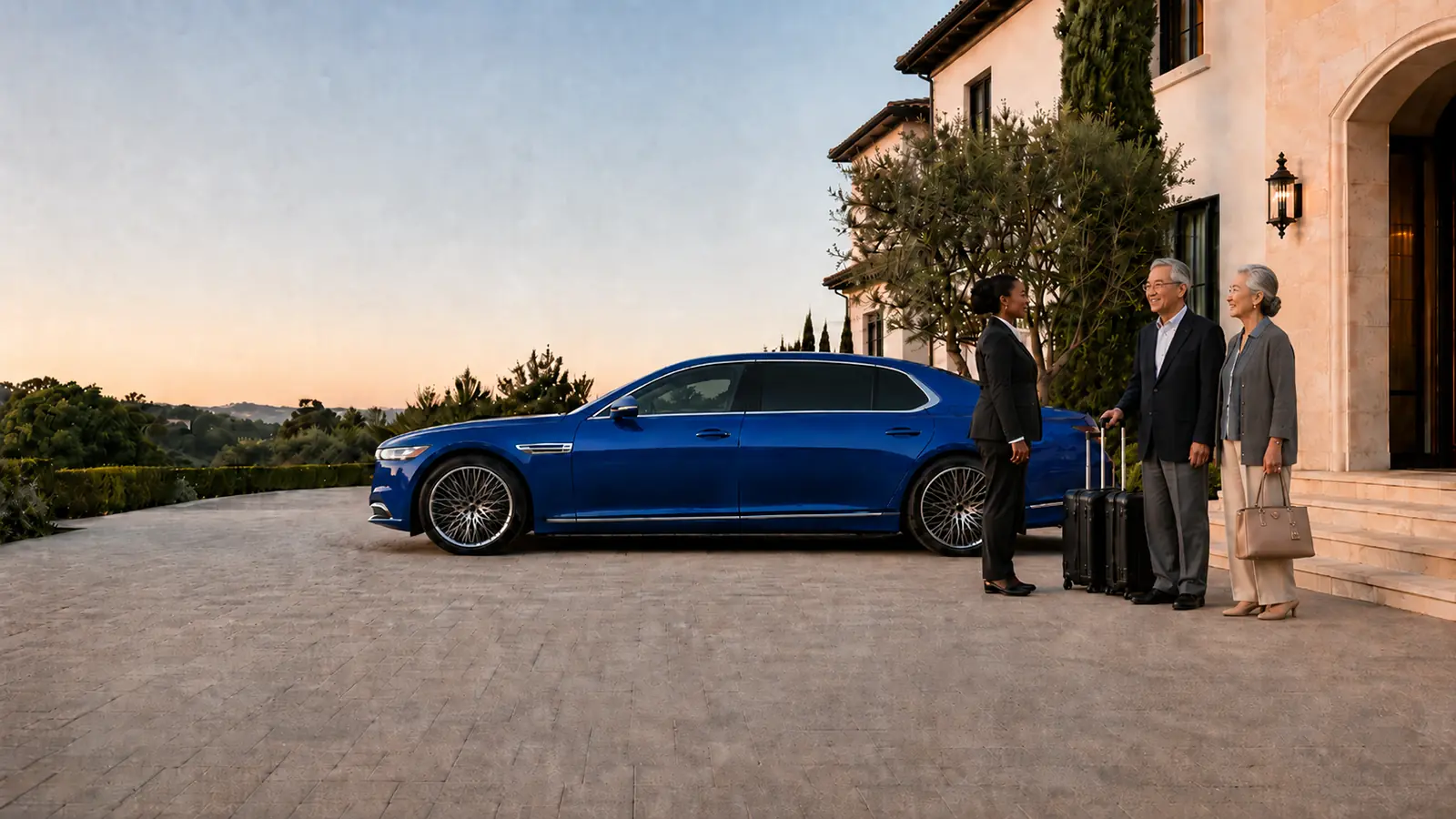
Airport transportation should simplify the flight, not add another uncertain part to the day. Your Car Our Driver sends a private driver to your home to operate your own vehicle. You leave with your luggage already loaded, arrive at the correct terminal entrance at the curb, and continue inside while your private driver returns your car to the location you arranged.
For the return, we monitor the incoming flight, bring your vehicle from home, and coordinate the meeting around the airport, terminal, baggage, and actual arrival time. You leave in the car you know, with a private driver handling the trip home.
The result is different from leaving a car in airport parking or requesting unfamiliar transportation after landing. Your vehicle spends the trip at home, and the airport trip begins and ends at your own door.
Departure Drop-Off at the Correct Terminal Curb
Your private driver arrives at the time established for the reservation, helps load the luggage, and operates your vehicle from home to the airport. The departure plan is built around the flight time, airline, terminal, check-in needs, traffic, passenger needs, and the airport's current access rules.
At the airport, you are brought to the correct terminal entrance at the sidewalk or closest lawful departure point. That is the practical meaning of terminal drop-off. You do not enter a parking structure, search for a space, unload bags on a distant level, or wait for a shuttle from a remote lot. You step from your own vehicle at the curb and continue to check-in.
International flights, checked baggage, mobility assistance, children, and holiday periods may require more time. Tell us what applies so the schedule protects the airline's requirements.
Your Vehicle Returns Home While You Fly
After you enter the terminal, your private driver returns your vehicle according to the instructions established before the reservation. Many clients have the car taken back to their residence and secured in the garage or driveway. Others choose another approved location.
Garage codes, gates, alarm instructions, key placement, and access to the residence require exact planning. Some clients use a keypad or a lockbox. The method is the client's decision, and the private driver follows the approved instructions. We do not assume permission to enter a garage, residence, or gated property.
Your vehicle then remains at home instead of accumulating days of airport parking. There is no return search through a structure, parking shuttle, or forgotten row after a tiring flight.
The Return Trip Begins Before the Aircraft Lands
An airport pickup should not begin only after a passenger turns on a phone. We monitor the incoming flight so an early arrival, delay, or schedule change can be considered before the private driver leaves with your vehicle.
Flight status is one part of the timing. The private driver also considers the airport, terminal, likely taxi time after landing, baggage claim, international processing when applicable, traffic into the terminal area, and the pickup method you selected. A landing time is not the same as a curb-ready time.
You should still send a message if the airline changes the flight number, moves you to another flight, or changes the arrival airport. Public flight information cannot reveal every passenger-specific change.
Curbside Pickup or an Inside Meeting Near Baggage Claim
Clients have different priorities after landing, so the return can be arranged in two common ways.
For the fastest exit, the private driver stages away from the active terminal curb until you have collected your luggage and reached the designated passenger pickup location. You call or text when ready. The driver brings your own vehicle to the lawful curb, loads the luggage, and drives you home. Airport rules do not allow a car to wait indefinitely at the sidewalk, so the final coordination matters.
For a meet-and-greet arrangement, the private driver can park your vehicle in short-term parking and meet you at or near baggage claim when airport rules and the reservation permit. The driver helps with luggage and accompanies you to your car. This choice can be useful for an older traveler, a family with children, a person carrying several bags, or anyone who prefers to see a familiar face inside the terminal.
The two options are not identical. Curbside pickup usually minimizes walking and parking time. An inside meeting provides more assistance from baggage claim but may involve a walk to the parked vehicle and a short-term parking charge. We discuss the preference before the flight and confirm the meeting point for the airport involved.
Where the Time Savings Actually Occur
The mileage to an airport tells only part of the story. Personal airport parking can require an entrance queue, a search for an open space, unloading, a walk or shuttle, and the same process in reverse after landing. Off-site parking adds another transfer. App-based pickup may require a walk or shuttle to a separate operating area at airports that restrict those services.
With a private driver in your own car, the departure vehicle reaches the authorized terminal curb and then leaves the airport. On the return, the vehicle arrives only for the meeting. The passenger avoids leaving a car for several days and avoids building the trip around a parking lot or a separate transportation provider.
The greatest savings are often after the flight. A tired traveler moves from baggage claim to a planned meeting, enters a familiar vehicle, and begins the trip home without making another transportation decision.
Los Angeles International Airport: The Correct Terminal Matters
LAX is not one curb. It is a large terminal complex with an upper departures level, a lower arrivals level, multiple terminal entrances, changing construction conditions, and heavy traffic that can build before the vehicle reaches the airline.
For a departure, the reservation should include the airline, flight number, terminal shown by the airline, checked-baggage plan, and desired arrival time. The private driver approaches the correct terminal and brings you to the upper-level departure curb or other location then directed by airport personnel. Accurate terminal information prevents an unnecessary trip through the central loop.
For a return, personal vehicles may collect passengers at authorized arrivals curbs outside baggage claim, but a vehicle cannot remain there waiting. The private driver coordinates from an appropriate waiting or staging location and enters the terminal area when you are ready. This avoids the separate LAX-it process used by many app-based services and avoids an economy-parking shuttle.
LAX familiarity means understanding that the airline check-in location, arrival terminal, and final lawful curb all matter. It also means allowing for traffic within the airport, not merely traffic to it. Whether a client begins in Malibu, Pasadena, the South Bay, or Orange County, the plan must protect the final terminal approach.
John Wayne Airport: Orange County Airport Timing
John Wayne Airport is the natural commercial airport for many clients in Newport Beach, Irvine, Costa Mesa, Santa Ana, Corona del Mar, Newport Coast, Laguna Beach, and other Orange County communities. Its scale is more compact than LAX, but the terminal and curb still need to be correct.
The passenger terminal is organized around Terminals A, B, and C. Departing passengers use the upper level, while arriving passengers and baggage claim are on the lower level. Numbered columns along the arrivals roadway help establish a precise pickup point. The white curb is for active loading and unloading, not waiting.
The time savings at John Wayne come from bypassing the parking structures and moving directly between home and the terminal curb. On return, the private driver can wait away from the active curb until the client is ready at the agreed column. If an inside meeting is arranged, the baggage claim areas provide a clear place to connect before walking to the briefly parked vehicle.
John Wayne also serves private aviation. For those trips, the reservation must identify the fixed-base operator, not simply the airport code. The appropriate entrance for a private terminal is separate from the commercial passenger curb.
Long Beach Airport: A Compact Airport With an Active Curb
Long Beach Airport often makes sense for clients in Long Beach, the South Bay, northern Orange County, and communities with practical access to the 405. Its compact passenger area can reduce airport complexity, but the active loading curb still cannot be used as a waiting area.
For departure, the private driver brings the client directly to the passenger terminal area and then leaves with the vehicle. That eliminates the parking-structure step even at an airport known for a shorter walk. For arrival, the private driver waits away from the terminal until the client has collected baggage and is ready at the agreed location.
The airport approach from Lakewood Boulevard and Donald Douglas Drive is different from the terminal loops at LAX or Ontario. Familiarity means knowing where active passenger loading occurs, allowing for current roadway instructions, and avoiding repeated circling while the traveler is still inside.
When the flight schedule fits Long Beach, direct curb access in the client's own vehicle removes another set of parking and transfer steps.
Hollywood Burbank Airport: Confirm the Airline Entrance
Hollywood Burbank Airport is often practical for the San Fernando Valley, Burbank, Glendale, Pasadena, the eastern side of Los Angeles, and studio-related travel. Its commercial operation uses terminal areas identified by airline, so the active airline entrance must be confirmed for the service date.
Airport familiarity does not mean relying on an old habit. It means checking the airline and airport information, confirming the active terminal entrance, and following the passenger pickup instructions in effect that day.
At the curb, waiting is not permitted. For an arriving client, the private driver times the approach after the traveler has reached the meeting point. For a departure, the driver brings the client to the current airline entrance and then returns the vehicle home.
The time savings are especially clear for a Valley or studio client when the available flight makes Burbank a better choice than LAX. The traveler selects the airport, and we execute that plan in the client's own car.
Ontario International Airport: Separate Terminals Require Precision
Ontario International Airport is in San Bernardino County, outside our three-county home service area, but it is an important choice for many Riverside County clients and some clients in eastern Orange County and eastern Los Angeles County.
Ontario uses Terminals 2 and 4 for its main passenger operations and a separate International Arrivals facility. Each has its own address and approach. A reservation that says only "Ontario Airport" is not complete enough for a precise arrival. The airline, flight number, and terminal or international-arrivals designation should be confirmed.
For departure, the private driver uses the appropriate terminal curb and returns the client's vehicle home. For arrival, the driver stages away from the curb and proceeds to the loading zone after the client is ready. That avoids a parking-lot shuttle and the need to leave the vehicle at the airport during the trip.
For Riverside, Corona, Norco, Eastvale, Jurupa Valley, and other Inland Empire origins, Ontario may reduce the distance compared with LAX. The correct choice depends on the flight and final destination. Once the client chooses Ontario, separate-terminal familiarity helps protect the pickup.
Palm Springs International Airport: The Coachella Valley Airport
Palm Springs International Airport serves Palm Springs and the wider Coachella Valley, including Rancho Mirage, Palm Desert, Indian Wells, La Quinta, Indio, and surrounding communities. Its passenger terminal is more compact than LAX, but seasonal travel and resort schedules can concentrate vehicles at the curb.
Departing clients can be brought to the curb in front of the passenger terminal. Returning clients collect luggage near the terminal's baggage claim area, then connect with the private driver according to the curbside or inside-meeting plan selected in advance.
The time savings often extend beyond the airport grounds. A client may begin at a resort, private club, gated community, or residence several valley communities away. The private driver handles Highway 111, Interstate 10, local resort approaches, luggage, and the return home while the passenger rests after the flight.
Palm Springs is also an airport where seasonal airline schedules can change. Flight monitoring and accurate flight numbers are especially important when an itinerary has been moved or rebooked.
Private Aviation Requires the Exact Facility, Not Just the Airport
Private aviation does not operate from one standard passenger terminal. A single airport may have several fixed-base operators with separate street entrances, reception areas, security procedures, and aircraft ramps. The correct facility name is essential.
In Los Angeles County, private aviation may involve Van Nuys, Hawthorne, Santa Monica, Torrance, Long Beach, or another approved facility. Orange County trips may use a private terminal at John Wayne or Fullerton Municipal Airport. Riverside County may involve Riverside Municipal Airport, French Valley Airport, Jacqueline Cochran Regional Airport, Palm Springs, Corona Municipal Airport, or another facility selected by the aircraft operator.
When reserving, provide the airport, fixed-base operator, aircraft operator, scheduled arrival or departure, tail number when available, passenger contact, and any vehicle-access instructions. For a departure, the private driver takes the client to the specified facility. For an arrival, the meeting is coordinated with the facility and the passenger rather than assumed from a commercial flight board.
Private aviation timing can change for weather, aircraft positioning, or operational reasons. Direct communication with the authorized contact is therefore as important as the scheduled time. The private driver follows public-road and facility access rules and does not enter restricted airfield areas without authorization.
Luggage, Families, Older Travelers, and Mobility Needs
Airport service often involves more than one suitcase. Golf clubs, garment bags, business materials, medical equipment, a folding wheelchair, a walker, child seats, or luggage for several people can change loading time and vehicle capacity.
Using your own vehicle lets you choose the sedan, SUV, van, Sprinter, or limousine that already fits the passengers and belongings. Every passenger must have a legal seat and seat belt. The vehicle must be safe, properly insured, and suitable for the assignment.
Tell us if a traveler needs additional time at the curb, help with ordinary luggage, a particular side of the vehicle for entry, or an inside meeting near baggage claim. A private driver can assist with customary luggage and vehicle entry as arranged, but the service is not medical transportation and does not replace an attendant or caregiver.
For children, the parent or guardian provides the appropriate vehicle and properly installed child seat. The reservation should identify authorized adults and communication instructions.
Early Departures and Late Arrivals
An early flight can require the private driver to reach the client's home before ordinary business hours. A late arrival may change after a delay. Establish pickup, property access, luggage, alarm, and contact instructions before travel day.
The private driver should not have to discover a difficult vehicle control, gated entrance, electric charging issue, or key-return method at the last minute. Share the vehicle year, make, model, transmission, fuel or charge status, and any unusual operating feature when reserving.
Flight monitoring helps with the aircraft schedule, but it does not replace communication about the client. If a traveler misses a connection, changes airports, checks additional baggage, or needs more time inside the terminal, a call or text allows the plan to adjust.
Every Private Driver Is a W-2 Employee
Every driver is a W-2 employee of our company, not a gig contractor. Before driving clients, each driver undergoes a background check and a personal interview, and each has a minimum of two years of professional experience driving clients before joining us. The checking does not stop at hire. We are enrolled in the California DMV's Employer Pull Notice program, which monitors driving records continuously: the DMV sends us an updated record after any conviction, accident, failure to appear, suspension, or license action.
California does not require drug and alcohol screening for a service like ours. We screen every driver anyway, on an ongoing basis, to the same standard the state sets for licensed car services. These safeguards are among the reasons clients have returned to us year after year since 2007.
The employment relationship is especially important when the private driver may hold a house key, garage remote, gate information, and the keys to the client's vehicle while the client is traveling. Company policies apply, workers' compensation coverage is in place, and Your Car Our Driver remains accountable for the service. Every private driver also signs a nondisclosure agreement.
Communication, Vehicle Visibility, and Privacy
You receive the private driver's cell number for communication about terminal timing, baggage status, and the final meeting point. You may share a live tracking link with anyone you choose so that person can follow the vehicle in real time. Our Chairman and CEO is available by cell as another point of accountability.
The client decides who receives location access. The link can help a selected person confirm that the vehicle has returned home or is approaching the airport.
Your own vehicle also preserves a familiar private setting. After landing, you can make a call, speak with family, review the next appointment, or rest without transferring personal belongings into an unfamiliar car. The vehicle carries no Your Car Our Driver markings.
Request the Same Private Driver for Future Flights
Airport routines often repeat. A client may use the same airline, home entrance, garage arrangement, luggage pattern, and preferred meeting method several times a year. You may request the same private driver for a future reservation. Availability cannot be guaranteed, but we make every reasonable effort to honor the request.
Familiarity can reduce the amount of routine explanation, but current information must still control every reservation. Airlines change terminals, airports change roadway instructions, homes change gate codes, and flight schedules change. The client and company should confirm the facts for each trip.
More than 90% of our business comes from repeat clients. That figure is particularly meaningful for airport service because clients repeatedly entrust us with their vehicle, their home instructions, and a schedule that cannot be missed. They return because the process worked and the company remained accountable.
Clear Airport Pricing Before the Reservation
The current hourly rate for a client-owned sedan or SUV is $60 per hour for the first eight hours and $93 per hour after eight hours. For a client-owned van, Sprinter, or limousine, the current rate is $66 per hour for the first eight hours and $105 per hour after eight hours. All listed prices include a 20% gratuity, so the stated price is the total hourly price.
The standard minimum reservation is three hours. Reservations beginning at or after 6:00 p.m. on New Year's Eve have a five-hour minimum. There is no surge pricing because of an early departure, late arrival, weekend, holiday, weather, or busy airport period.
Airport parking, tolls, and other trip expenses incurred for the reservation are the client's responsibility. An inside baggage-claim meeting may require short-term parking. We discuss the expected method and provide an exact quote based on the pickup location, airport, schedule, and vehicle.
Booking a Private Airport Driver
Begin with the travel date, home or pickup address, airport, airline, flight number, scheduled departure or arrival, passenger count, and amount of luggage. For a departure, include the desired terminal arrival time. For a return, choose curbside pickup or request an inside meeting near baggage claim.
Also provide the vehicle details and the approved plan for the car after departure or before arrival. Explain the garage, gate, keypad, lockbox, alarm, key, or household-contact instructions that apply.
For private aviation, include the exact fixed-base operator and the best operational contact. For an international arrival, identify the international-arrivals facility and allow for processing time after landing.
Your Car Our Driver then coordinates the private driver, vehicle movement, flight monitoring, and meeting plan. The purpose is simple: you reach the correct airport entrance in your own vehicle, your car waits at home while you travel, and it returns to bring you home after the flight.
Your Flight, Your Car, Our Private Driver
You leave from your own door, travel in your own car, and step out at the correct terminal curb. Your private driver returns the vehicle home. After the trip, the driver brings it back, meets you according to the airport plan, handles the luggage as arranged, and drives you home.
Call and we will discuss the details.